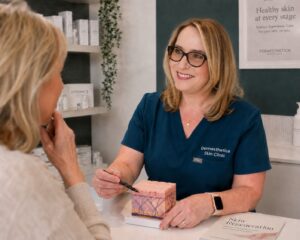
If you’ve spent any time looking at skin treatments online, you may have come across the term “vampire facial.”
It is certainly memorable — but it doesn’t really explain what the treatment is, and it can actually make PRP sound far more dramatic than it needs to be.
The term is commonly associated with Platelet-Rich Plasma (PRP), particularly when PRP is used alongside microneedling. However, PRP can be used in different ways within aesthetic practice, and not every PRP treatment is a “vampire facial.”
So what exactly is PRP? Why are platelets used in regenerative treatments? And what is actually happening within the skin?
Let’s take a closer look.

What Is PRP?
PRP stands for Platelet-Rich Plasma.
It is an autologous treatment, which simply means that the material used for the treatment comes from your own body.
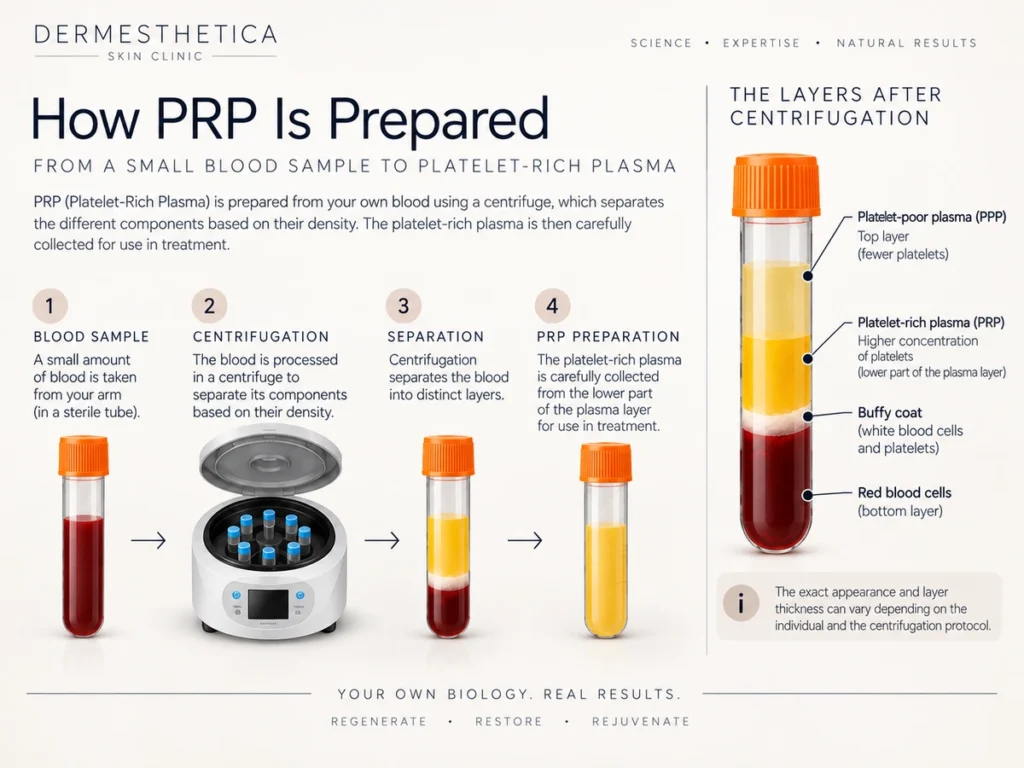
A small amount of blood is collected and processed using a centrifuge to separate its different components. The platelet-rich portion is then prepared for use according to the treatment protocol.
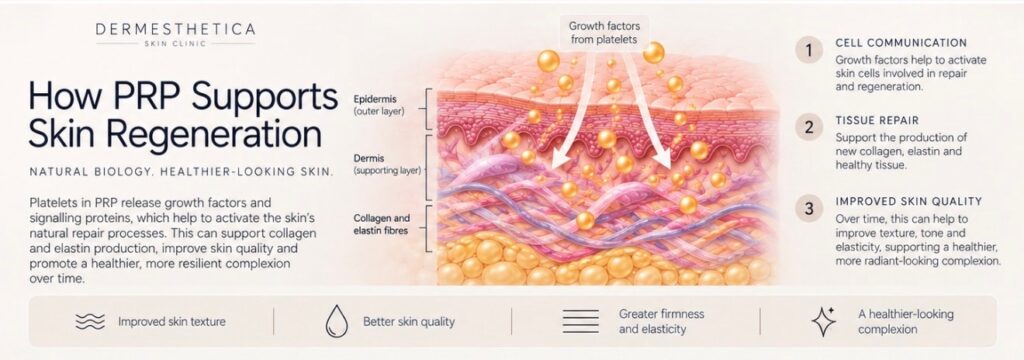
Most people associate platelets with blood clotting, but they also play an important role in the body’s normal healing response. Platelets release signalling proteins and growth factors involved in communication between cells, tissue repair and regeneration.
It is these biological properties that have led to PRP being used across a number of medical and aesthetic applications.
Within aesthetic practice, the aim is not to add something artificial to the skin, but to use a preparation derived from your own blood as part of a regenerative approach to supporting skin quality.
PRP Is Not a Filler
This is an important distinction.
PRP doesn’t add facial volume. It doesn’t freeze muscle movement. And it isn’t a dermal filler.
PRP works very differently from treatments designed to alter facial structure or temporarily reduce muscle activity.
When PRP is used for skin rejuvenation, the focus is generally on the quality of the tissue itself — supporting processes associated with repair and regeneration rather than changing facial proportions.
It is best thought of as a biological treatment that supports tissue function rather than a cosmetic injectable that creates immediate structural change.
So, What Is a “Vampire Facial”?
This is where the terminology becomes confusing.
“Vampire facial” is a popular nickname that usually refers to PRP combined with microneedling.
During this combination treatment:
- A blood sample is taken and centrifuged to isolate the platelet-rich plasma.
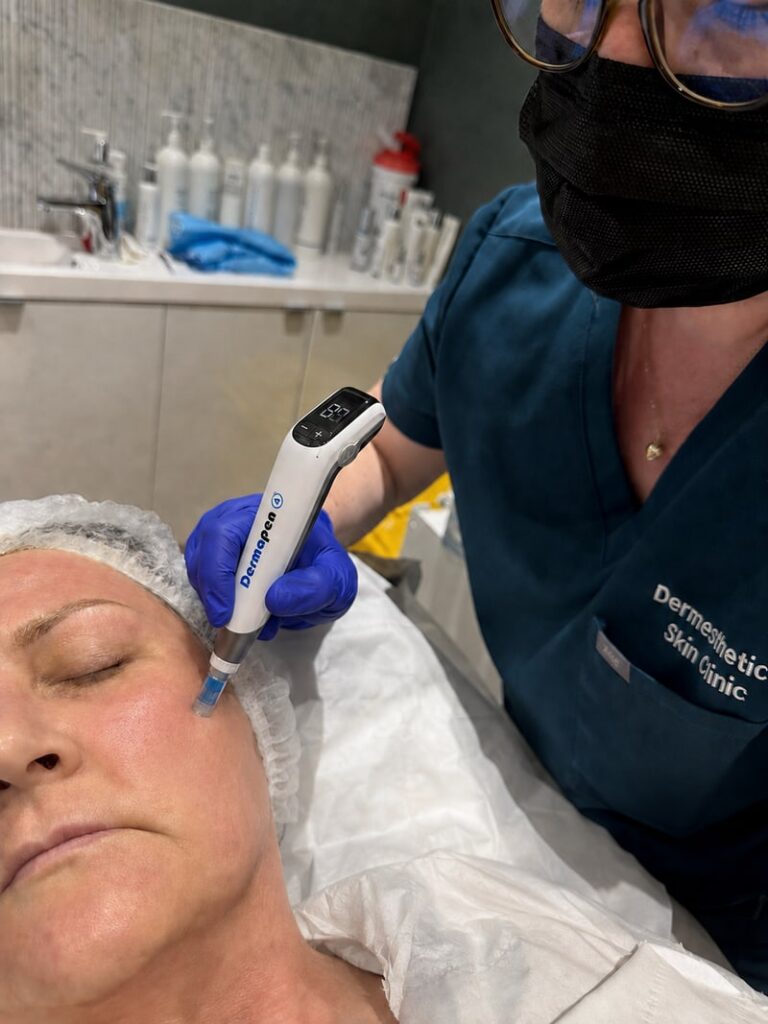
- Microneedling is performed to create controlled microchannels in the skin.
- The PRP is applied to the skin during and/or immediately after the needling process.
Because microneedling creates thousands of tiny superficial pathways, applying PRP allows the preparation to interact with the tissue during the skin’s initial wound-healing response.
However, PRP can also be delivered directly into selected areas of the skin without microneedling.
So two clinics advertising a “vampire facial” may not necessarily be performing exactly the same procedure.
This is why I prefer to explain what treatment is actually being performed and why, rather than relying on the nickname.
At Dermesthetica, PRP may be used as a standalone treatment or combined with Dermapen 4 microneedling when this is appropriate for the individual concern.
Why Combine PRP With Microneedling?
Microneedling and PRP are two separate treatment approaches.
Microneedling creates controlled micro-injuries within the skin, stimulating a natural repair response. It may be considered for concerns involving skin texture, fine lines, enlarged pores and selected types of acne scarring.
PRP, on the other hand, introduces a platelet-rich preparation derived from your own blood as part of a regenerative treatment approach.
In selected cases, combining the two allows us to bring these different mechanisms together within one treatment plan.
But more treatment does not automatically mean better treatment.
Some skin concerns may be better suited to microneedling alone. In other circumstances, PRP may be considered without microneedling. And for some clients, neither would be my first recommendation.
The treatment should follow the needs of the skin — not the trend.
If you are trying to understand the differences between these approaches, you can read:
PRP vs Microneedling vs Skin Boosters – Which Treatment Is Right for You?
What Does PRP Actually Do for the Skin?
This is another area where I think expectations need to be realistic.
PRP is sometimes described online using dramatic phrases such as “reversing ageing” or “turning back the clock.” I prefer not to describe it that way.
Skin ageing is a complex biological process influenced by many factors, including genetics, hormones, UV exposure, lifestyle and the natural changes in collagen and other components of the skin over time.
No single treatment stops that process.
PRP is better understood as a treatment used to support the skin’s regenerative processes and overall skin quality.
Depending on the individual and treatment plan, it may be considered where the focus is on concerns such as changes in texture, resilience, fine lines or generally tired-looking skin.
The important word here is support.
PRP works with biological processes rather than creating an instant cosmetic change.
Why Aren’t PRP Results Immediate?
This is actually one of the most important things to understand about regenerative treatments.
If the purpose of a treatment is to support processes associated with repair and regeneration, those processes take time.
PRP should therefore not be judged in the same way as a treatment designed to produce an immediate visible change.
Some people may notice changes earlier than others, but where improvement occurs, it generally develops progressively.
Individual response can also vary considerably. Age, skin condition, general health, lifestyle, treatment area and the treatment protocol can all influence how somebody responds.
This is one reason I am cautious about dramatic before-and-after images taken immediately following injectable treatments. Temporary swelling or changes directly after a procedure are not the same as a longer-term treatment result.
Does PRP Work Better Because It Comes From Your Own Blood?
Using your own biological material is certainly one of the characteristics that makes PRP different from many other aesthetic treatments.
But “natural” or “from your own body” should not automatically be interpreted as meaning better, stronger or appropriate for everyone.
PRP still needs appropriate preparation, treatment selection and clinical assessment.
And because PRP relies on biological material from the individual, it also makes sense that responses are not identical from one person to another.
That is why I prefer realistic expectations rather than promising a particular result simply because a treatment is regenerative.
Is PRP Only for Ageing Skin?
No.
PRP is often discussed in relation to skin ageing, but chronological age alone shouldn’t determine whether someone needs a particular treatment.
Two people of the same age can have very different skin.
What matters more is the condition of the skin, the concern being treated and what we are trying to achieve.
For one person, the priority may be hydration. For another, it may be texture or acne scarring. Someone else may be noticing changes in resilience and overall skin quality.
Those concerns don’t automatically require the same treatment.
This is also why I don’t believe in starting with:
“Which treatment do you want?”
I would rather start with:
“What is happening with your skin?”
The treatment decision comes afterwards.
PRP and Healthy Skin Ageing
For me, regenerative treatments fit particularly well into a wider conversation about healthy skin ageing.
Healthy ageing isn’t about trying to make someone look twenty years younger or removing every visible sign of age.
Our skin naturally changes throughout life. Collagen production changes, hormonal changes can influence hydration and resilience, cumulative UV exposure becomes more visible and the skin’s repair processes also change.
Good treatment planning should therefore evolve with the skin.
Sometimes that may mean PRP. At another stage it could mean microneedling, a skin booster, professional skincare or simply improving barrier health before considering anything more advanced.
The aim isn’t to continuously add more treatments.
It is to support the skin appropriately at the stage it is in now.
Beyond the “Vampire Facial”
Perhaps the biggest misconception about PRP is created by the nickname itself.
“Vampire facial” makes for an attention-grabbing headline, but it reduces a much more interesting regenerative approach to an image of blood on the face.
PRP is better understood by looking at the biology behind it: your own platelet-rich preparation being used as part of a carefully selected regenerative treatment strategy.
And whether PRP is used alone or alongside microneedling should depend on what we are trying to achieve — not on which version happens to be most popular on social media.
Considering PRP?
If you would like to know more about how PRP is performed at Dermesthetica, available treatment options, suitability and pricing, you can visit my dedicated:
PRP Skin Rejuvenation Treatment Page
If you are unsure whether PRP, Dermapen 4 microneedling or a Skin Booster would be more appropriate for your skin, you can also read:
PRP vs Microneedling vs Skin Boosters – Which Treatment Is Right for You?
Every treatment at Dermesthetica begins with an individual consultation and assessment so that the treatment plan is based on your skin, your concerns and your goals rather than simply following a trend.
Warm wishes,
Marlena
Advanced Skin Practitioner
Qualified Nurse
Founder of Dermesthetica Skin Clinic