Which Treatment Is Right for You?
If you’re looking to improve your skin without dramatically changing the way you look, you may have come across three increasingly popular options: PRP, microneedling and skin boosters. All three can form part of a skin rejuvenation plan, but they don’t work in the same way — and one isn’t necessarily “better” than another.
So how do you know which treatment to choose? The answer depends less on the treatment name and more on what is actually happening within your skin and what you would like to improve.
Is dehydration your main concern? Has your skin lost firmness and elasticity? Are you struggling with acne scarring or uneven texture? Or have you started noticing more general changes in skin quality associated with ageing, sun exposure or hormonal changes?
Understanding what each treatment is designed to do can make choosing between them much easier.
First, What Do We Mean by “Skin Quality”?
When we talk about skin ageing, the conversation often focuses on wrinkles. But healthy skin is about much more than being wrinkle-free. Skin quality is influenced by several interconnected factors, including:
collagen and elastin
hydration
skin thickness
elasticity
texture
pigmentation
barrier function
cellular turnover
the skin’s ability to repair itself
As we age, many of these processes gradually change. Collagen production declines, cellular renewal becomes slower and the skin can become drier, thinner and less resilient. Genetics, cumulative sun exposure, lifestyle and hormonal changes can all influence how and when these changes become visible.
For women approaching perimenopause and menopause, changes can sometimes seem particularly sudden. Declining oestrogen affects several aspects of skin biology, including collagen, hydration, elasticity and barrier function. This is why someone may suddenly notice that their skin feels drier, looks less firm or doesn’t seem to respond to the skincare routine that worked perfectly well a few years earlier.
And this is also why there isn’t one universal “anti-ageing” treatment. Different changes within the skin require different approaches.
Three Treatments, Three Different Approaches
A simple way to understand PRP, microneedling and skin boosters is to look at how each treatment approaches skin rejuvenation.
What Is Microneedling?
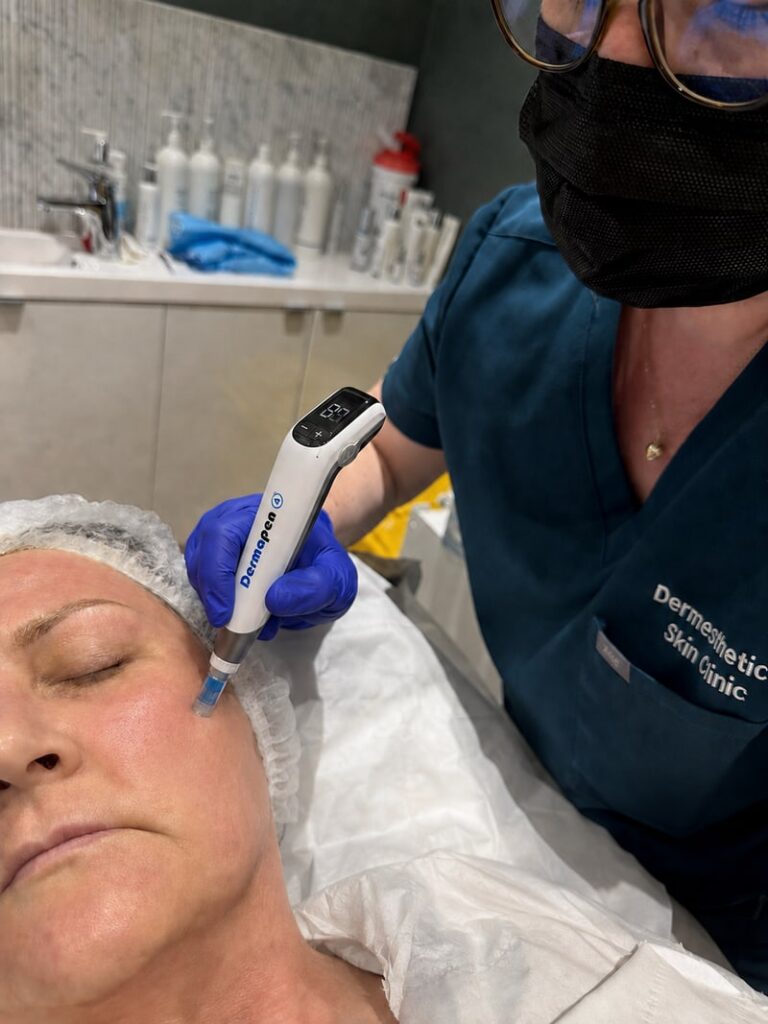
Microneedling is a minimally invasive treatment that uses very fine sterile needles to create controlled microchannels within the skin. At Dermesthetica, I use Dermapen 4, which allows treatment depth to be adjusted according to the area and concern being treated.
The controlled micro-injury initiates the skin’s natural wound-healing response. This involves a cascade of biological processes associated with tissue repair and collagen remodelling. Rather than adding volume or changing facial structure, the objective is to encourage progressive improvement within the skin itself.

What Can Microneedling Help With?
Depending on individual suitability, microneedling may be considered for:
- fine lines
- uneven skin texture
- enlarged pores
- atrophic acne scarring
- loss of firmness
- selected pigmentation concerns
- general skin rejuvenation
Microneedling is particularly well established as an option for appropriate types of acne scarring, although scar type and severity should always be assessed before treatment.
Results aren’t instant. The treatment relies on biological repair and remodelling, which continue after the procedure. Depending on the concern, a course of treatments may therefore be recommended.
Think of microneedling as: Stimulate → Repair → Remodel

What Is PRP?
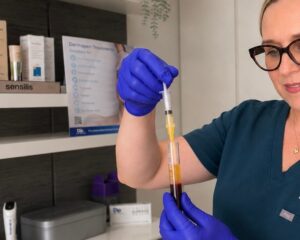
PRP stands for platelet-rich plasma. It is an autologous treatment, meaning the material used during the procedure is obtained from your own body. PRP contains concentrated platelets and associated growth factors involved in normal tissue healing and repair. Within aesthetic practice, it is used as a regenerative approach to supporting skin and tissue quality.
PRP may be considered when concerns include:
- declining skin quality
- fine lines
- loss of firmness
- skin rejuvenation
- areas where the skin appears thinner or less resilient
- selected acne-scarring protocols
PRP is also used within appropriate hair-restoration protocols.

Importantly, PRP is not a dermal filler.
It isn’t primarily designed to create volume or alter facial proportions. The objective is to support the quality of the tissue itself.
Think of PRP as Signal → Repair → Regenerate.
PRP is sometimes associated with the commonly used term “vampire facial”, particularly when discussed online. However, PRP can be used in different ways, and the terminology can be confusing. I explore exactly what PRP is, how it is used for skin rejuvenation and what a ???vampire facial??? actually means in my dedicated PRP Explained guide.

What Are Skin Boosters?
Skin boosters approach skin rejuvenation differently again. The term is commonly used for injectable treatments designed primarily to improve skin quality rather than significantly alter facial structure or replace volume.
Different products have different formulations. Some are based predominantly on hyaluronic acid, while others combine hyaluronic acid with additional components such as amino acids.
- declining skin quality
- fine lines
- loss of firmness
- skin rejuvenation
- areas where the skin appears thinner or less resilient
- selected acne-scarring protocols
PRP is also used within appropriate hair-restoration protocols.

Depending on the product and individual skin needs, injectable skin-quality treatments may be considered for concerns including:
- dehydration
- reduced elasticity
- fine lines
- crepey skin
- loss of firmness
- dullness
- declining overall skin quality
Examples include treatments such as Profhilo and Jalupro, although their formulations and mechanisms aren’t identical. The important point isn’t necessarily which brand is most popular. It is selecting an appropriate treatment according to the condition of the skin, treatment area and individual goals.
Think of skin boosters as: Support → Hydrate → Improve Skin Quality
PRP vs Microneedling vs Skin Boosters: What’s the Difference?
Once we understand how they work, the distinction becomes much clearer.
| Microneedling | PRP | Skin Boosters | |
|---|---|---|---|
| Main approach | Controlled skin stimulation | Autologous regenerative approach | Injectable skin-quality support |
| How it works | Initiates repair and remodelling through controlled micro-injury | Uses platelet-rich plasma obtained from your own blood | Uses injectable formulations such as hyaluronic acid-based products |
| May be considered for | Acne scars, texture, pores, fine lines | Skin quality, fine lines, regenerative treatment | Dehydration, elasticity, fine lines, crepey skin |
| Adds traditional filler volume? | No | No | Not the primary purpose |
| Results | Progressive | Progressive | Product and protocol dependent |
| Main focus | Texture & collagen remodelling | Tissue quality & regenerative support | Hydration, elasticity & skin quality |
These are therefore not three versions of the same treatment. They approach skin quality from different directions.
Questions about Microneedling
Which Treatment Is Best for Fine Lines?
This depends on why the lines have developed. Fine lines can be influenced by:
- collagen loss
- dehydration
- cumulative sun exposure
- repeated facial movement
- thinning of the skin
- hormonal changes
If dehydration and reduced elasticity are major contributors, a skin booster may be considered. If textural changes and collagen remodelling are the priority, microneedling may be appropriate. If the objective is broader regenerative support and improvement in tissue quality, PRP may form part of the treatment plan. This is why simply seeing a line doesn’t automatically tell us which treatment should be used. We need to understand the skin around it.
Which Treatment Is Best for Acne Scarring?
For appropriate types of atrophic acne scarring, microneedling is often considered because controlled skin injury can stimulate collagen remodelling. PRP may also be incorporated into selected acne-scarring protocols alongside other treatment approaches. However, not all acne scars are the same. Rolling, boxcar and ice-pick scars have different characteristics and may require different treatment strategies. Active acne, pigmentation and individual skin type also need to be considered. An assessment should therefore come before choosing the procedure.
Which Treatment Is Best for Dehydrated or Crepey Skin?
If dehydration and reduced elasticity are the dominant concerns, an appropriate skin booster or injectable skin-quality treatment may offer more targeted support than microneedling alone. However, dehydrated skin doesn’t automatically require an injectable treatment. A compromised skin barrier, inappropriate skincare, environmental exposure and lifestyle factors can all contribute to dehydration. In some cases, improving barrier function and the home skincare routine should be the first step. Treating skin successfully isn’t always about choosing the most advanced procedure. Sometimes it is about addressing the fundamentals first.
What About Loss of Firmness and Overall Skin Quality?
This is where the distinction becomes less black and white. If the concern isn’t one particular wrinkle but a more general feeling that the skin has become thinner, duller, less firm or less resilient, several approaches may be considered. Microneedling can support remodelling. PRP may form part of a regenerative approach. Skin boosters can target hydration and other aspects of skin quality. The most appropriate option depends on which changes are contributing most to what you’re seeing.
What About Menopausal Skin?
This is particularly important because menopausal skin isn’t simply “older skin”. During perimenopause and menopause, hormonal changes can affect several aspects of skin biology at the same time. Women may begin to notice:
- increased dryness
- reduced elasticity
- thinning skin
- greater sensitivity
- changes in texture
- fine lines becoming more visible
- loss of firmness
- slower recovery
- reduced luminosity
There isn’t one specific “menopause treatment” that addresses all of these changes. If dehydration and loss of elasticity are the main concerns, improving hydration and skin quality may be the priority. If collagen loss and texture are more prominent, microneedling may be considered. If the aim is regenerative support and improvement in overall tissue quality, PRP may form part of the treatment strategy. For some women, different approaches may be appropriate at different stages. The important thing is to understand what has changed within the individual skin, rather than simply treating a person’s age
Can PRP and Microneedling Be Combined?
Yes, for appropriately selected clients. And this is an important point because the title of this article may make the treatments sound as though they are always competing alternatives. They aren’t. Microneedling provides controlled mechanical stimulation that initiates a repair and remodelling response. PRP provides an autologous biological component containing platelet-derived factors involved in tissue repair. This means that in some treatment protocols, the two approaches may complement one another. So sometimes the question isn’t “PRP or microneedling?” It may be: “Would combining PRP and microneedling be appropriate for my skin?” For a more detailed explanation of how PRP is used — including the difference between injected PRP and treatments commonly described as a “vampire facial” — see my dedicated PRP Explained guide.
Can Skin Boosters Be Used Alongside PRP or Microneedling?
Potentially, yes. But a combination approach doesn’t necessarily mean performing several procedures during the same appointment. Skin treatment can be planned in stages. For example, the priority may initially be restoring barrier health. The next stage may focus on hydration. Collagen stimulation or regenerative treatment may then be introduced when appropriate. Maintenance can follow. The objective shouldn’t be to perform as many treatments as possible. It should be to choose the right treatment, at the right time, for the right reason.
“Will my skin get used to treatments so that eventually nothing works?”
Skin doesn’t generally work in that way. Having an appropriate collagen-stimulating or regenerative treatment today does not mean you are “using up” your skin’s ability to respond in the future. Your skin remains biologically active throughout life. In fact, there can be advantages to supporting skin quality earlier rather than waiting until changes become more established. Generally, younger skin has a stronger natural capacity for collagen production, repair and regeneration, although individual response will always vary. This does not mean starting aggressive aesthetic treatments at a young age or treating skin unnecessarily. It means that when there is an appropriate indication, supporting the skin earlier can be more about maintaining skin quality, resilience and healthy function rather than trying to correct more advanced changes later. What does happen is that your skin continues to age and change. Collagen production gradually declines, hormones change, cumulative sun exposure continues to have an effect, and skin thickness, hydration and repair capacity may also change with age. This means that the treatment that is appropriate for your skin today may not necessarily be the treatment you need five or ten years from now. Good aesthetic treatment therefore isn’t about continuously doing more and more or progressing towards increasingly aggressive procedures. It is about reassessing the skin as it changes and supporting it appropriately at each stage. There is also an important balance. More treatment is not automatically better. Appropriate treatment intervals, recovery time and careful treatment selection all matter. The aim should always be healthy ageing and maintaining good skin quality, rather than chasing ageing.
Which Treatment Gives the Most Natural-Looking Result?
PRP, microneedling and skin boosters can all appeal to people who want to improve their skin without significantly changing their facial features. Microneedling relies on the skin’s repair and remodelling response. PRP uses material prepared from your own blood. Skin boosters are primarily intended to support skin quality rather than produce the structural volume associated with traditional dermal fillers. For me, the objective isn’t to make someone look like a different person. It’s to help the skin look healthier, stronger and better supported while maintaining natural facial characteristics.
How Quickly Will I See Results?
Skin rejuvenation isn’t necessarily an instant process. Microneedling results develop gradually as repair and remodelling take place. PRP outcomes are also expected to develop progressively rather than immediately. Skin boosters may produce earlier improvements in hydration, although the timeline varies according to the formulation, protocol and individual response. Skin biology takes time. When the goal is genuine improvement in skin quality rather than temporarily disguising a concern, gradual change can be a normal part of the process.
How Many Treatments Will I Need?
There isn’t one treatment schedule suitable for everyone. The recommended number and frequency of treatments may depend on:
- age
- skin condition
- treatment area
- degree of collagen loss
- acne scarring
- hormonal changes
- previous treatments
- lifestyle
- home skincare
- individual treatment goals
Some people may benefit from a course followed by maintenance. Others may need a completely different approach. This is why treatment planning should begin with consultation rather than simply selecting a procedure from a treatment menu.
PRP, Microneedling or Skin Boosters – How Do I Choose?
A simple starting point is:
- Texture + collagen remodelling → Microneedling
- Regenerative support + tissue quality → PRP
- Hydration + elasticity + skin quality → Skin Boosters
But real skin rarely fits perfectly into one category. You may have dehydration and collagen loss. Acne scarring and uneven texture. Menopausal dryness and reduced elasticity. This is why a personalised treatment plan can be more useful than simply asking which individual treatment is “best”.

The Dermesthetica Approach
At Dermesthetica Skin Clinic in Hendon, North-West London, my approach is centred around improving skin health and quality while maintaining natural-looking results. I don’t believe in choosing treatments simply because they’re popular or currently trending.
Before recommending PRP, Dermapen 4 microneedling, a skin booster or a combination approach, I consider the condition of the skin, medical history, current skincare, previous treatments, lifestyle and individual goals.
Sometimes the priority is hydration. Sometimes it is collagen stimulation. Sometimes a regenerative approach may be appropriate. And sometimes the first recommendation isn’t an advanced treatment at all — the skin may need barrier support first.
The goal isn’t to do more. It is to understand what your skin needs and choose the most appropriate approach from there.
Questions about PRP
Is PRP better than microneedling?
Neither treatment is universally better because they work differently. Microneedling uses controlled micro-injury to initiate repair and remodelling, while PRP uses platelet-rich plasma as an autologous regenerative approach. The most appropriate option depends on the concern being treated.
Is PRP better than skin boosters?
They have different purposes. PRP provides an autologous regenerative approach, while skin boosters primarily provide injectable support for hydration and other aspects of skin quality. Treatment selection should depend on the condition of the skin and individual goals.
Are skin boosters the same as dermal fillers?
Not exactly. Although many skin boosters contain hyaluronic acid, their primary purpose is generally to improve skin quality and hydration rather than create the structural volume associated with traditional volumising fillers.
Can PRP and microneedling be combined?
Yes, they may be combined in appropriately selected clients because microneedling provides controlled mechanical stimulation while PRP provides platelet-derived biological factors associated with tissue repair.
Which treatment is best for menopausal skin?
There isn’t one universal treatment for menopausal skin. Hormonal changes can affect hydration, collagen, elasticity, skin thickness and barrier function, so treatment should be selected according to the changes present within the individual skin.
If I start collagen-stimulating treatments now, will they stop working when I’m older?
Having an appropriate treatment now doesn’t mean you are using up your skin’s ability to respond in the future. Your skin continues to age and its needs change over time, so treatment strategies should also evolve rather than simply becoming more aggressive.
Which treatment is suitable if I don’t want Botox or dermal fillers?
PRP, microneedling and skin-quality injectables work differently from Botox and traditional volumising fillers. They may appeal to people whose priority is improving skin quality while maintaining their natural facial characteristics. Individual suitability still needs to be assessed.
Final Thoughts
When comparing PRP vs microneedling vs skin boosters, the most important thing to understand is that we’re not comparing three versions of the same treatment. We’re comparing three different approaches to improving skin quality.
Microneedling stimulates controlled repair and remodelling. PRP uses your own platelet-rich plasma as part of a regenerative approach. Skin boosters provide injectable support for hydration, elasticity and overall skin quality.
Sometimes one treatment may clearly be the most appropriate starting point. Sometimes different treatments can complement one another as part of a carefully planned programme. And sometimes the skin needs something much simpler first.
So rather than asking: “Which treatment should I book?” A better place to start is “What does my skin actually need?” Because once we understand that, choosing the right treatment becomes much easier.
Warm wishes,
Marlena
Advanced Skin Specialist | Qualified Nurse
Founder of Dermesthetica Skin Clinic