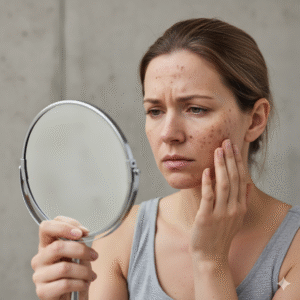
Have you ever looked in the mirror and thought:
“My skin just doesn’t look like it used to.”
Perhaps your skin feels tight after cleansing, your makeup no longer sits smoothly, or you have noticed increased sensitivity, redness or fine lines.
If this sounds familiar, you are not alone.
As a skin practitioner, one of the most common things I hear from clients is:
“I’ve changed my products, but my skin still feels dry, sensitive and looks tired.”
Often, the problem is not simply dryness. In many cases, the skin is actually dehydrated, and the skin barrier may be struggling to function as it should.
Understanding the difference can be the key to healthier, calmer and more resilient skin.

What Is Dehydrated Skin?
Many people are surprised to learn that dehydrated skin is not actually a skin type.
Dehydration is a skin condition that occurs when the skin lacks water.
This means that even oily or combination skin can become dehydrated.
Common signs of dehydrated skin include:
• Tightness after cleansing
• Dull or tired-looking skin
• Increased sensitivity
• More noticeable fine lines
• Rough texture
• Makeup not sitting well
• Skin that feels oily but still tight
In fact, oily but dehydrated skin is one of the most common and misunderstood concerns discussed by skincare professionals today.
Does Drinking More Water Fix Dehydrated Skin?
Many people assume that dehydrated skin simply means they need to drink more water. While staying hydrated is important for overall health, the relationship between water intake and skin hydration is more complex.
Skin dehydration is often linked to a compromised skin barrier, environmental factors, skincare habits, hormonal changes and lifestyle factors such as stress and lack of sleep.
This means that although drinking adequate water is important, it is not always enough to resolve dehydrated skin on its own. Supporting the skin barrier with appropriate skincare, daily SPF protection and healthy lifestyle habits is often equally important.
In clinic, I frequently see clients who drink plenty of water but still experience dehydrated, sensitive skin due to an impaired skin barrier.
A healthy, well-functioning skin barrier helps the skin retain moisture more effectively, which is why addressing the underlying cause of dehydration is often just as important as increasing water intake.

Dry Skin vs Dehydrated Skin: What’s the Difference?
Many people use the terms “dry” and “dehydrated” interchangeably, but they are not the same thing.
| Dry Skin | Dehydrated Skin |
| Skin type | Skin condition |
| Lacks oil | Lacks water |
| Usually lifelong | Can affect anyone |
| Often feels rough and flaky | Often feels tight and dull |
| Needs nourishing lipids | Needs hydration and barrier support |
It is possible to have oily skin and still be dehydrated. In fact, many clients experiencing congestion and breakouts are surprised to discover that dehydration is contributing to their skin concerns.
What Is the Skin Barrier?
Think of your skin barrier as your skin’s protective shield.
Its job is to:
• Keep moisture in
• Protect against environmental damage
• Defend against irritants and bacteria
• Support healthy skin function
When the barrier is healthy, skin feels comfortable, balanced and resilient.
When it becomes compromised, water escapes more easily, leading to dehydration, sensitivity and irritation.
Signs Your Skin Barrier May Be Compromised
A damaged skin barrier can often look very similar to dehydration.
Common signs include:
• Redness
• Sensitivity
• Stinging when applying products
• Dry patches
• Increased breakouts
• Rosacea flare-ups
• Itching
• Skin that suddenly reacts to products it previously tolerated

One of the biggest clues is when your skin suddenly becomes sensitive to products you have used comfortably for years.
What Causes Skin Barrier Damage?
In clinic, I frequently see clients unintentionally damaging their skin while trying to improve it.
Some of the most common causes include:
• Over-exfoliation
• Using too many active ingredients
• Harsh cleansers
• Excessive retinol use
• Sun exposure
• Environmental stress
• Chronic stress
• Hormonal changes
• Lack of sleep
Many people are surprised to learn that more skincare does not always mean healthier skin. Sometimes the best thing we can do is simplify and support the barrier.

Hormones, Menopause and Skin Dehydration
As women move through peri-menopause and menopause, declining oestrogen levels can affect both skin hydration and barrier function.
Oestrogen plays an important role in maintaining the following:
• Collagen production
• Skin hydration
• Barrier function
• Elasticity
• Wound healing
• Pigment regulation
• Vascular stability
During peri-menopause and menopause, declining oestrogen levels can reduce natural hyaluronic acid production, weaken the skin barrier and increase transepidermal water loss (TEWL).
As a result, many women notice their skin suddenly feels drier, more sensitive and less resilient.
This can lead to:
• Increased dryness
• Sensitivity
• Reduced elasticity
• Slower healing
• A loss of that healthy glow many women notice in earlier years
This is one of the reasons why women often tell me:
“I feel like I’ve suddenly aged overnight.”
In reality, hormonal changes may be playing a significant role.
This is why hydration and barrier support become increasingly important during this stage of life.
Ingredients That Help Support a Healthy Skin Barrier
When choosing skincare products, look for ingredients that help support hydration and strengthen the skin barrier.
Remember, healthy skin is not about using the most products. It is about using the right products consistently.
Some of my favourites include the following:

Supporting Your Skin Barrier
The good news is that skin barrier health can often be improved with the right combination of skincare, lifestyle habits and professional support.
Appropriate skincare can play an important role in maintaining hydration, reducing moisture loss and supporting overall skin resilience.
Ingredients such as ceramides, humectants, essential fatty acids and barrier-supportive botanicals can help improve skin comfort and strengthen the skin’s natural protective function.
One example of a skincare range that places strong emphasis on skin barrier health, and one that I often recommend to my clients, is Epionce. Developed from years of research into skin barrier function, the range focuses on supporting hydration, reducing visible signs of skin stress and promoting overall skin health, making it particularly suitable for individuals experiencing dryness, sensitivity and age-related skin changes.
Alongside a personalised skincare routine, some simple ways to support your skin barrier include:
Using a gentle cleanser
Avoiding over-exfoliation
Wearing SPF daily
Using hydrating and barrier-supportive ingredients
Prioritising sleep and stress management
Staying consistent with your skincare routine
Remember, healthy skin is not created overnight. It is built through daily habits, consistent support and understanding what your skin truly needs.
However, the most appropriate skincare approach will always depend on your individual skin concerns, lifestyle and overall skin health, which is why a personalised approach is so important.
Professional Treatments for Dehydrated Skin in Hendon, North-West London
For clients experiencing dehydration, sensitivity or impaired barrier function, I often recommend treatments focused on restoring hydration and supporting overall skin health.
Depending on individual needs, this may include the following:
• HydraFacial
• Advanced Hydrating Facial Treatments
• Cytocare Mesotherapy
• Profhilo
• Jalupro
• PRP (Plated- Rich Plasma)
The most appropriate treatment will always depend on your skin concerns, goals and overall skin health.
A professional consultation allows us to identify the underlying causes of dehydration and create a personalised treatment plan tailored specifically to your skin.
Final Thoughts
Healthy skin is not about having the most expensive products or the most complicated routine.
It is about understanding what your skin needs and giving it the support it deserves.
When hydration improves and the skin barrier is functioning well, skin often appears calmer, healthier, more radiant and more resilient.
If your skin feels tight, sensitive, dull or simply not like itself, it may be time to look beyond your skincare products and assess the health of your skin barrier.
At Dermesthetica, every treatment begins with a thorough consultation to understand your skin, lifestyle, health history and goals. Together, we can create a personalised plan to restore hydration, strengthen your barrier and support long-term skin health.
If any of this sounds familiar, you don’t have to navigate it alone. A personalised consultation can help identify the underlying causes of dehydration and create a plan to support healthier, stronger and more resilient skin.
Because healthy skin starts with a healthy barrier. 🤍
With care,
Marlena
Advanced Skin Practitioner, Qualified Nurse & Founder of Dermesthetica