Hormonal changes affect far more than our menstrual cycle, they influence almost every organ in the body, including our skin and hair.
Throughout life, our skin responds to changing hormone levels. During puberty, hormones often trigger excess oil production and acne. Pregnancy may bring a radiant glow for some women, while others experience pigmentation or increased sensitivity. However, one of the most significant hormonal transitions occurs during perimenopause and menopause, when changes in hormone levels can profoundly affect the skin’s structure, function and appearance.
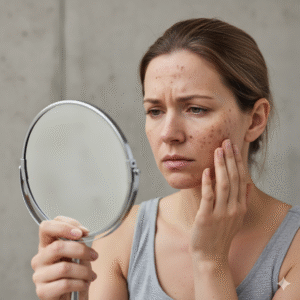
Many women notice that the skincare routine they have relied on for years suddenly no longer seems to work. Skin may become drier, more sensitive, less firm or develop concerns they have never experienced before, such as adult acne, rosacea flare-ups or increased pigmentation. These changes can feel frustrating and, at times, can affect confidence and overall wellbeing.
The good news is that these changes are a natural part of the ageing process, and there is so much we can do to support healthy skin before, during and after menopause.
At Dermesthetica, I believe healthy skin is about far more than reducing wrinkles or chasing perfection. My philosophy is centred on understanding why skin changes occur and creating personalised treatment plans that support healthy skin from within.
Supporting women through the hormonal changes that affect their skin has become one of the areas I am most passionate about. Every woman’s journey is unique, which is why I believe treatment should always be personalised, evidence-based and focused on long-term skin health rather than quick fixes.
By combining professional treatments, evidence-based skincare and lifestyle support with a holistic approach to wellbeing, my aim is to help women maintain healthy, resilient skin and feel confident at every stage of life.
Why This Matters
Hormonal skin changes are often dismissed as an unavoidable part of getting older, but understanding why they happen allows us to make informed choices about how we care for our skin.
While we cannot stop the natural ageing process, we can support healthy skin by protecting the skin barrier, stimulating collagen, managing inflammation and adopting a personalised approach to skincare and professional treatments.
The Skin–Hormone Connection
Many people think of the skin as simply the body’s outer covering, but it is actually a highly active, hormonally responsive organ.
Hormones influence many of the skin’s essential functions, including:
- Collagen production
- Elastin formation
- Sebum (oil) production
- Skin barrier function
- Blood vessel function
- Hair growth and scalp health
Because the skin is so closely connected to our hormones, it often reflects what is happening inside the body long before other symptoms become obvious.
Persistent adult acne, increasing dryness, heightened sensitivity, unexplained pigmentation, slower wound healing or hair thinning may all be influenced by hormonal changes or, in some cases, underlying medical conditions.
This is why I believe every successful treatment begins with a thorough consultation. Understanding your medical history, lifestyle, skincare routine and treatment goals allows me to create a personalised plan that is both safe and effective. It also helps identify when referral to your GP or another healthcare professional may be appropriate, as some skin changes can be linked to underlying hormonal or endocrine conditions.
Healthy skin begins with understanding the whole person, not simply treating the symptoms we see on the surface.
Understanding Perimenopause, Menopause and Post-Menopause
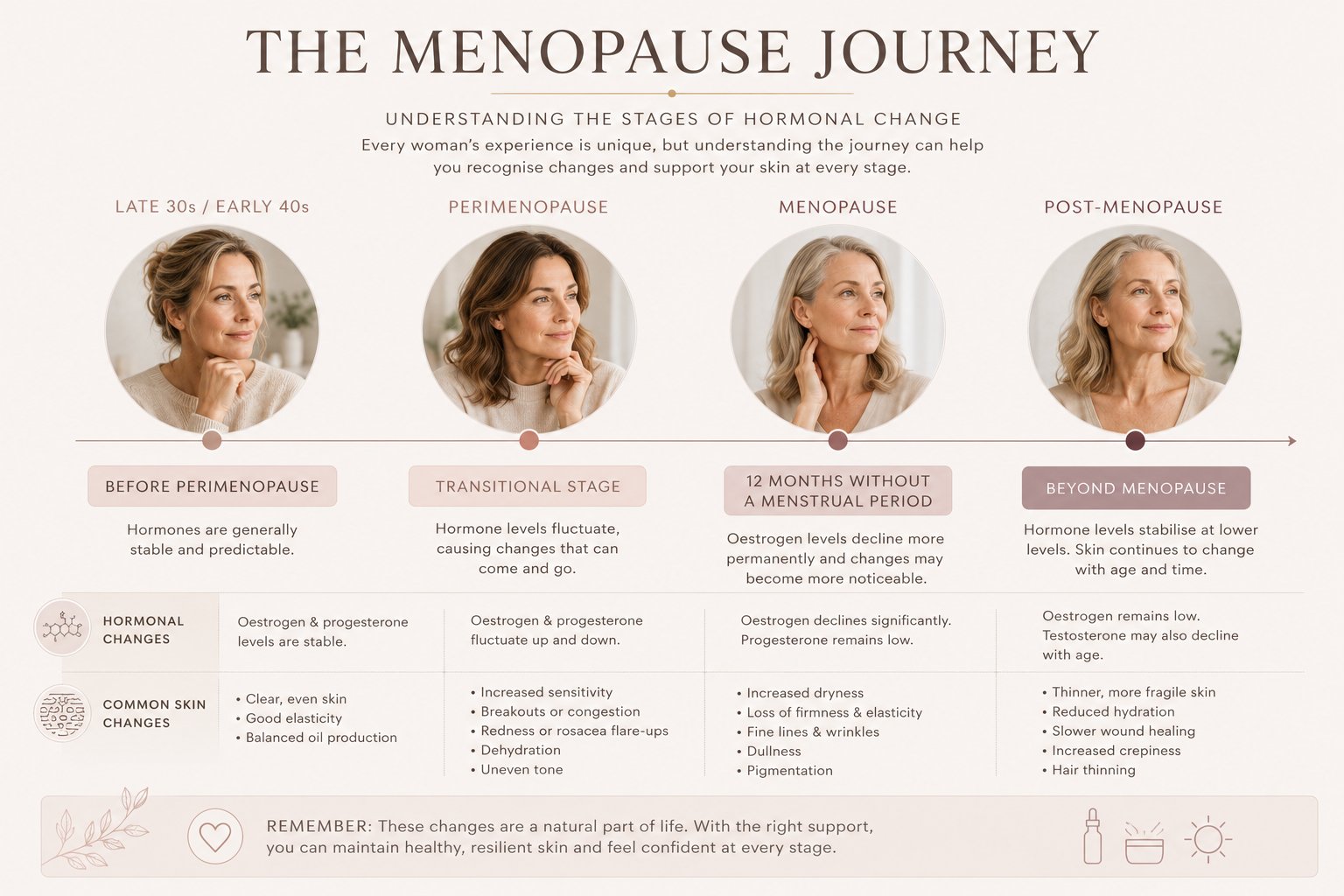
Menopause is often spoken about as though it is a single event, but it is actually a gradual biological transition that unfolds over many years.
Each stage brings different hormonal changes, which is why the skin can behave differently throughout the journey.
Perimenopause
Perimenopause is the transitional stage leading up to menopause and can begin several years before a woman’s final menstrual period.
For many women, perimenopause begins between the ages of 40 and 45, although some may notice symptoms in their late 30s, while others experience changes later. This stage can last anywhere from a few years to over a decade before menopause occurs.
During this time, oestrogen and progesterone levels fluctuate significantly, often causing changes that feel unpredictable. It is common for women to experience different skin concerns from month to month as hormone levels continue to rise and fall.
Some women notice that their skin suddenly becomes more sensitive, while others experience adult acne despite never having struggled with breakouts before. Redness, flushing, dehydration, increased oiliness or pigmentation may also become more noticeable.
For many women, this is the stage where they first realise that the skincare products they have trusted for years are no longer giving the same results.
Menopause
A woman is considered menopausal after twelve consecutive months without a menstrual period.
In the UK, the average age of menopause is between 51 and 52 years, although it can occur earlier due to genetics, medical conditions or certain medical treatments.
If menopause occurs before the age of 45, it is known as early menopause, while menopause before the age of 40 is referred to as premature ovarian insufficiency (POI). Women experiencing early menopause should seek medical advice, as they may benefit from additional assessment and support.
As oestrogen levels decline more permanently, changes within the skin become increasingly noticeable.
Many women experience:
- Increased dryness
- Loss of firmness
- Fine lines becoming more noticeable
- Reduced elasticity
- Increased skin sensitivity
- Slower wound healing
- Changes in facial contours
- Reduced skin resilience
These changes are completely natural, but they can sometimes feel overwhelming, particularly when they seem to happen over a relatively short period of time.
Post-Menopause
Post-menopause refers to the years following menopause when hormone levels stabilise at lower levels.
Although hormonal fluctuations become less dramatic, the effects of reduced oestrogen continue to influence the skin over time.
Skin may become thinner, more fragile and slower to repair itself. Collagen production naturally continues to decline with age, making long-term skin support increasingly important.
Rather than trying to reverse the ageing process, the goal should be to maintain healthy skin function, preserve collagen where possible and support the skin’s natural ability to repair and protect itself.
Healthy ageing is not about looking younger, it is about helping your skin remain healthy, resilient and comfortable throughout every stage of life.
How Hormones Influence Skin Health
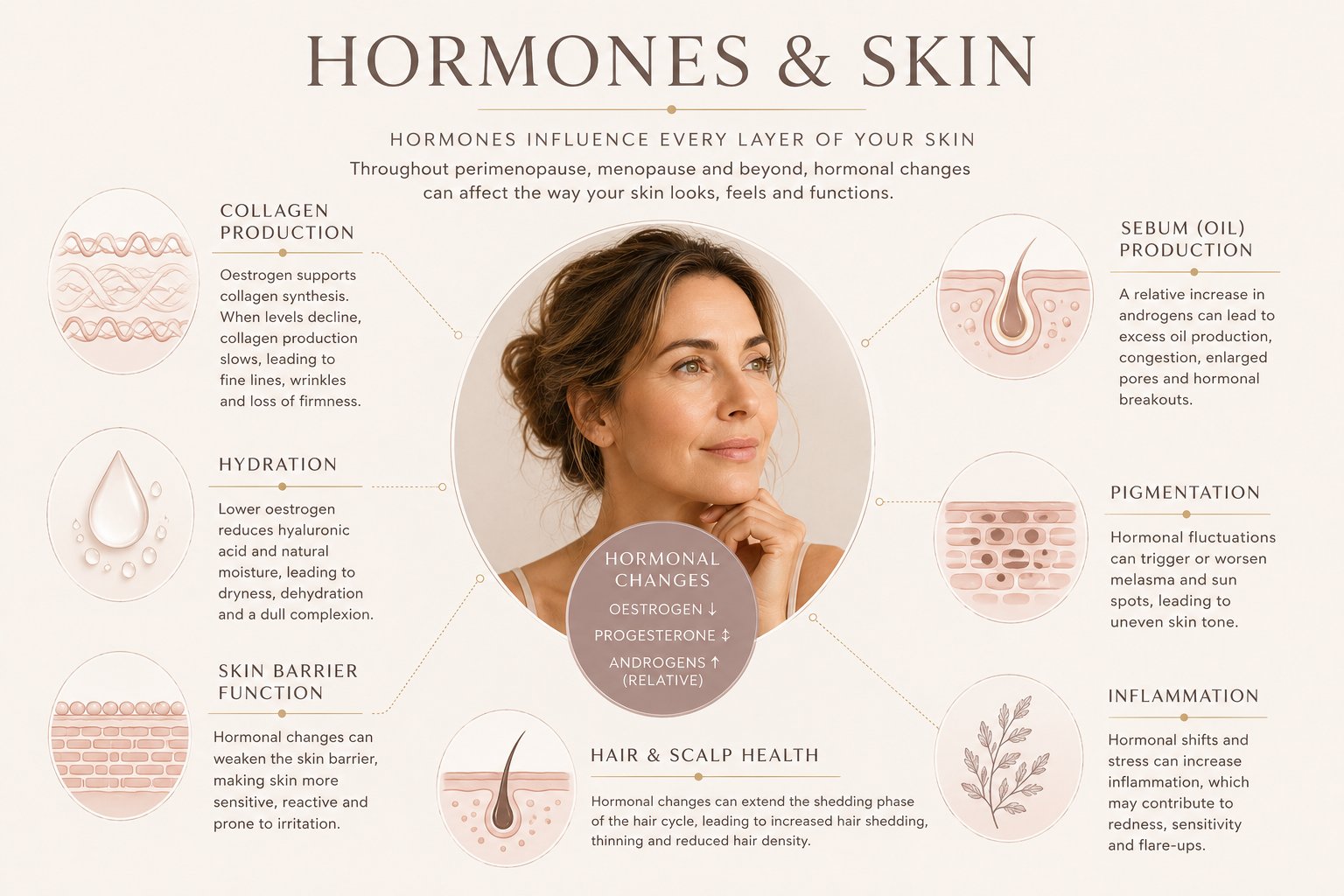
Hormones work together to regulate many of the processes that keep our skin healthy and functioning optimally. As these hormone levels change, particularly during perimenopause and menopause, the effects often become visible on the skin.
Oestrogen – The Foundation of Healthy Skin
Oestrogen is often considered the most important hormone for female skin health.
It supports:
- Collagen production
- Skin hydration
- Elasticity
- Barrier function
- Sebum production
- Pigment regulation
- Blood vessel stability
- Wound healing
As oestrogen levels decline, collagen production slows, hydration decreases and the skin barrier becomes less efficient. This contributes to many of the visible skin changes associated with menopause, including dryness, fine lines, increased sensitivity and loss of firmness.
Androgens – Maintaining Balance
Although often referred to as male hormones, androgens are naturally present in women and play an important role in regulating sebum production.
During perimenopause, oestrogen may decline more rapidly than androgen levels, resulting in a relative androgen dominance.
This may contribute to:
- Adult hormonal acne
- Increased oil production
- Increased facial hair growth
- Hair thinning on the scalp
This is one reason why some women experience oily skin and breakouts while also feeling that their skin has become increasingly dry or dehydrated.
Progesterone
Progesterone fluctuates considerably during perimenopause and may contribute to increased skin sensitivity, inflammation, water retention and hormonal breakouts.
Cortisol – The Stress Hormone
Stress has a significant impact on skin health.
Chronically elevated cortisol levels may:
- Increase inflammation
- Slow wound healing
- Accelerate collagen breakdown
- Weaken the skin barrier
This is one reason why periods of prolonged stress often coincide with flare-ups of eczema, rosacea, acne and other inflammatory skin conditions.
Thyroid Hormones
Healthy thyroid function plays an important role in maintaining normal skin metabolism and cellular turnover.
An underactive thyroid may contribute to:
- Dry skin
- Dull complexion
- Puffiness
- Thinning skin
- Slower skin renewal
Because these symptoms can overlap with menopause, persistent or significant changes should always be discussed with your GP.
Insulin and Blood Sugar Regulation
Blood sugar balance also plays an important role in healthy skin.
Frequent spikes in blood glucose can contribute to inflammation and a process known as glycation, where excess sugar damages collagen and elastin fibres.
Over time, this may accelerate visible signs of ageing and affect overall skin quality.
Supporting metabolic health through balanced nutrition, regular physical activity and healthy lifestyle habits benefits both overall health and the skin.
Common Skin Changes During Perimenopause and Menopause
Every woman’s experience is unique, but there are several concerns I regularly see in clinical practice.
These include:
- Dryness and dehydration
- Increased skin sensitivity
- A weakened skin barrier
- Rosacea flare-ups
- Adult hormonal acne
- Fine lines and wrinkles
- Loss of firmness and elasticity
- Uneven pigmentation
- Slower wound healing
- Increased skin fragility
These concerns often occur together rather than in isolation. For example, it is not uncommon for a woman to experience dehydrated skin alongside rosacea, adult acne and increasing sensitivity.
This is why successful treatment begins with understanding the underlying causes rather than focusing on a single symptom. Taking a personalised, holistic approach allows treatment plans to evolve alongside your skin, supporting its health throughout every stage of hormonal change.
Why Does Menopause Cause Collagen Loss?

One of the most significant changes that occurs during menopause is the gradual loss of collagen.
Collagen is the most abundant protein in the skin and provides its strength, firmness and elasticity. Together with elastin and hyaluronic acid, it helps keep the skin smooth, resilient and well hydrated.
As oestrogen levels decline, collagen production slows significantly. Research suggests that women may lose up to 30% of their skin collagen within the first five years after menopause, followed by a gradual decline of around 2% each year thereafter.
This reduction in collagen contributes to many of the visible changes associated with menopause, including:
- Fine lines and wrinkles
- Reduced skin firmness
- Loss of elasticity
- Increased skin laxity
- Slower wound healing
- Increased transepidermal water loss (TEWL)
- Greater skin fragility
While we cannot completely prevent these natural changes, we can take proactive steps to support collagen production, strengthen the skin barrier and maintain healthier skin for longer.
Rather than waiting until significant changes have occurred, I believe prevention and early intervention are some of the most effective ways to support healthy skin throughout the menopausal transition.
A Holistic Approach to Menopausal Skin Health
Healthy skin is influenced by much more than skincare products alone.
Hormones, genetics, nutrition, stress, sleep, physical activity, medical conditions and environmental factors all play an important role in how our skin looks, feels and functions.
This is why I take a holistic approach at Dermesthetica.
Rather than recommending the same treatment for everyone, every consultation begins by understanding your skin concerns, medical history, lifestyle, current skincare routine and long-term goals.
This allows me to create a personalised treatment plan that supports the skin as a whole rather than simply treating individual symptoms.
For some women, improving hydration and repairing the skin barrier may be the priority. Others may benefit from collagen stimulation, improving skin quality or managing pigmentation and inflammation.
Healthy ageing isn’t about chasing perfection, it’s about supporting your skin so it remains strong, resilient and functioning at its best throughout every stage of life.
The Five Pillars of Healthy Skin
My treatment philosophy is built around five key pillars that support healthy, resilient skin throughout perimenopause, menopause and beyond.
1. Protecting the Skin Barrier
The skin barrier is our first line of defence.
A healthy barrier helps retain moisture while protecting against irritation, allergens, pollution and bacteria.
When the barrier becomes compromised, skin often feels dry, tight, sensitive and more reactive.
Supporting barrier function is often the first step towards improving overall skin health.
2. Managing Inflammation
Low-grade, chronic inflammation can accelerate skin ageing and contribute to many common skin conditions, including rosacea, acne and increased sensitivity.
Reducing inflammation helps create an environment where the skin can repair and function more effectively.
3. Supporting Collagen Production
Collagen is one of the foundations of healthy skin.
Stimulating collagen naturally helps improve skin firmness, texture, elasticity and overall skin quality over time.
4. Maintaining Hydration
Hydrated skin functions better.
Maintaining adequate hydration improves comfort, supports healing and enhances the skin’s natural protective barrier.
5. Promoting Healthy Skin Function
Rather than focusing solely on individual lines or wrinkles, my aim is to improve the overall health and function of the skin.
When skin functions well, it naturally appears healthier, brighter and more resilient.
Professional Treatments That Support Menopausal Skin
As hormonal changes affect the skin’s natural ability to repair and regenerate, professional treatments can play an important role in maintaining skin quality.
Every treatment recommendation is tailored to your individual skin concerns, medical history and goals.
Dermapen 4 Microneedling
Microneedling is one of my favourite treatments for supporting healthy ageing because it works by stimulating the skin’s own natural repair processes.
Using the advanced Dermapen 4 device, controlled micro-channels are created within the skin, triggering the production of new collagen and elastin.
This treatment may help improve:
- Fine lines and wrinkles
- Skin texture
- Enlarged pores
- Mild scarring
- Overall skin quality
For women experiencing hormonal skin changes, microneedling can be an excellent option for supporting collagen production and improving skin resilience over time.
PRP (Platelet-Rich Plasma)
PRP is one of the most exciting regenerative treatments available in modern aesthetic medicine.
Rather than introducing synthetic substances into the skin, PRP uses the healing potential of your own blood.
After a small blood sample is taken, the platelets are carefully separated using a medical centrifuge. These platelets contain naturally occurring growth factors that help support tissue repair, collagen production and skin regeneration.
PRP may help improve:
- Skin quality
- Overall radiance
- Collagen stimulation
- Healing and recovery
Because PRP works with your body’s own regenerative processes, it complements my philosophy of supporting healthy skin naturally while respecting the skin’s biology.
It is not about changing your appearance, it is about improving the quality, strength and resilience of your skin.
Skin Boosters
As oestrogen levels decline, maintaining hydration becomes increasingly important.
Skin boosters are injectable treatments designed to improve skin quality by delivering ingredients such as hyaluronic acid and amino acids directly into the skin.
Depending on your individual needs, treatments such as Jalupro or Profhilo may help support hydration, improve elasticity and enhance overall skin quality.
Rather than adding volume, these treatments focus on improving the condition of the skin itself, making them an excellent option for women seeking subtle, natural-looking results.
Professional Chemical Peels
Not all chemical peels are aggressive.
When selected appropriately, gentle professional peels can help support healthy skin by encouraging controlled cellular renewal while respecting the skin barrier.
They may help improve:
- Uneven skin tone
- Mild pigmentation
- Congestion
- Early signs of ageing
The choice of peel should always be based on your individual skin condition and goals, particularly during perimenopause when the skin may become more sensitive.
LED Light Therapy
LED Light Therapy is a gentle, non-invasive treatment that complements many other procedures.
Red LED light may help support collagen production, reduce inflammation and promote healing, making it particularly beneficial for sensitive or hormonally changing skin.
Because there is no downtime, it can easily be incorporated into a personalised treatment plan.
Supporting Hair Health During Menopause
Hormonal changes do not only affect the skin, they can also influence the scalp and hair.
Many women notice increased hair shedding or gradual thinning during perimenopause and menopause as hormonal changes alter the normal hair growth cycle.
Early intervention is often beneficial.
At Dermesthetica, personalised Hair Restoration programmes are designed to support scalp health and encourage healthier hair growth.
Depending on your individual needs, treatment options may include:
- Dermapen Skin GROW™
- PRP Hair Restoration
- Professional scalp assessment
- Personalised home care recommendations
The aim is always to support healthier hair through evidence-based, regenerative treatments tailored to each individual.
Professional Skincare Matters
Professional treatments achieve the best results when combined with an effective home skincare routine.
As hormones change, the skin often requires greater support to maintain hydration, strengthen the skin barrier and protect collagen.
One of my preferred professional skincare ranges for peri-menopausal and menopausal skin is Epionce.
Rather than focusing solely on anti-ageing, Epionce is built around restoring healthy skin function and strengthening the skin barrier.
This aligns perfectly with my philosophy that healthy skin should always come before cosmetic correction.
Combined with active ingredients such as retinoids, antioxidants, peptides, ceramides and daily broad-spectrum SPF, professional skincare forms an essential part of maintaining healthy skin throughout every stage of hormonal change.
Lifestyle Factors That Influence Menopausal Skin Health
While professional treatments and effective skincare play an important role, healthy skin is also influenced by what happens beyond the treatment room.
Hormonal changes affect the body as a whole, which is why supporting your overall health can have a positive impact on your skin. Small, consistent lifestyle choices often work alongside professional treatments to help improve skin resilience and maintain long-term skin health.
Nourish Your Skin from Within
A balanced, nutrient-rich diet provides the building blocks your skin needs to repair and function effectively.
Foods rich in colourful fruits and vegetables, healthy fats, lean proteins and whole grains provide antioxidants, vitamins and essential nutrients that help support collagen production and reduce oxidative stress.
Omega-3 fatty acids, found in foods such as oily fish, walnuts and flaxseeds, may also help support the skin barrier and contribute to healthier-looking skin.
While no single food or supplement can prevent skin ageing, a balanced diet plays an important role in supporting overall skin health.
Hydration Matters
As oestrogen levels decline, the skin naturally becomes less able to retain moisture.
Drinking enough water is important for overall health, but hydration doesn’t come from water alone. Supporting the skin barrier with appropriate skincare ingredients such as ceramides, hyaluronic acid and glycerin is equally important in helping the skin retain moisture and function effectively.
Many women notice that their skin feels dry during menopause, but in reality it may also be dehydrated. Understanding the difference is key, as the most appropriate treatment and skincare approach will depend on your skin’s individual needs.
Sleep and Skin Repair
Our skin carries out many of its natural repair processes while we sleep.
Poor sleep can affect the skin barrier, increase inflammation and leave the complexion looking dull and tired.
Prioritising good sleep habits not only supports overall wellbeing but also allows the skin to recover and regenerate more effectively.
Stress and Skin Health
Stress is something we all experience, but prolonged stress can influence hormone levels and contribute to inflammation within the body.
Many women notice that periods of increased stress coincide with flare-ups of acne, rosacea, eczema or increased skin sensitivity.
Finding healthy ways to manage stress, whether through exercise, mindfulness, spending time outdoors or simply making time for yourself, can benefit both your overall wellbeing and your skin.
Exercise and Healthy Ageing
Regular physical activity offers benefits far beyond fitness.
Exercise supports circulation, cardiovascular health, metabolic function and overall wellbeing. It may also contribute to healthier-looking skin by improving blood flow and supporting the delivery of oxygen and nutrients to skin cells.
Strength training, in particular, becomes increasingly important during and after menopause, helping to maintain muscle mass, bone health and overall vitality as we age.
Healthy ageing is about looking after the whole body, not just the skin.
Healthy Skin Is a Journey, Not a Quick Fix
One of the most common misconceptions in aesthetic medicine is that there is a single treatment capable of reversing all the changes associated with ageing or menopause.
In reality, healthy skin is built through consistency.
The best results usually come from combining:
- Professional treatments tailored to your skin’s needs
- Medical-grade skincare
- Daily sun protection
- Healthy lifestyle habits
- Patience and realistic expectations
Rather than searching for quick fixes, I encourage my clients to think about skin health as a long-term investment.
Small improvements made consistently over time often achieve more natural and sustainable results than aggressive treatments performed infrequently.
Related Skin Concerns
Hormonal changes can affect every woman differently, which is why treatment should always be tailored to the individual rather than following a one-size-fits-all approach.
If you recognise some of the concerns discussed in this guide, you may also find these pages helpful:
Rosacea & Sensitive Skin
Learn more about why redness, flushing and skin sensitivity often become more noticeable during hormonal changes and discover the treatment options available to help calm and strengthen reactive skin.
Dehydrated Skin
Understand the difference between dry and dehydrated skin, how a weakened skin barrier contributes to dehydration, and the most effective ways to restore healthy, comfortable skin.
Acne & Breakouts
Adult acne is more common than many women realise. Discover why hormonal fluctuations can contribute to breakouts and explore treatment options that support clearer, healthier skin without compromising the skin barrier.
Ageing & Menopausal Skin
Explore the changes that occur as collagen production declines and learn how personalised treatment plans can help support healthy, resilient skin throughout every stage of menopause.
Hair Loss & Hair Thinning
Hormonal changes can affect the scalp as well as the skin. Learn more about the causes of female hair thinning and discover the regenerative treatment options available to support healthier hair growth.
Supporting Healthy Skin Through Every Stage of Life
No two women experience perimenopause or menopause in exactly the same way.
For some, the changes are subtle. For others, they can feel sudden and overwhelming.
Whatever your experience, it is important to remember that these changes are a natural part of life, and there are many ways to support your skin throughout the journey.
At Dermesthetica, every consultation begins with understanding your skin as part of the bigger picture. Rather than focusing on individual concerns in isolation, I consider your skin, medical history, lifestyle, current skincare routine and long-term goals before recommending a personalised treatment plan.
Whether your priority is improving hydration, strengthening the skin barrier, stimulating collagen, managing pigmentation, calming sensitivity or supporting healthier hair growth, my aim is always the same, to help you achieve healthier, stronger and more resilient skin through evidence-based, personalised care.
Final Thoughts
Perimenopause and menopause bring many natural changes to the skin, but they do not mean that healthy, confident skin is out of reach.
Understanding why these changes occur is the first step towards making informed decisions about your skincare, lifestyle and professional treatments.
By focusing on skin health rather than simply treating visible signs of ageing, it is possible to support collagen, strengthen the skin barrier and maintain healthy, resilient skin for years to come.
If you’re noticing changes in your skin and would like personalised advice, I would be delighted to help.
Every skin is unique, which is why every treatment plan at Dermesthetica is tailored to the individual. Together, we can create a long-term approach that supports not only healthier-looking skin, but healthier skin that continues to function at its very best throughout every stage of life.
With care,
Marlena
Advanced Skin Practitioner, Qualified Nurse & Founder of Dermesthetica